
Flippo’s Missteps Spark New Energy in Nevada’s Political Landscape
What should have been an uneventful congressional race in Northern Nevada has instead transformed into a focal point for the Democrats, as Republican candidate David Flippo faces a series of blunders that heighten the race's competitiveness.
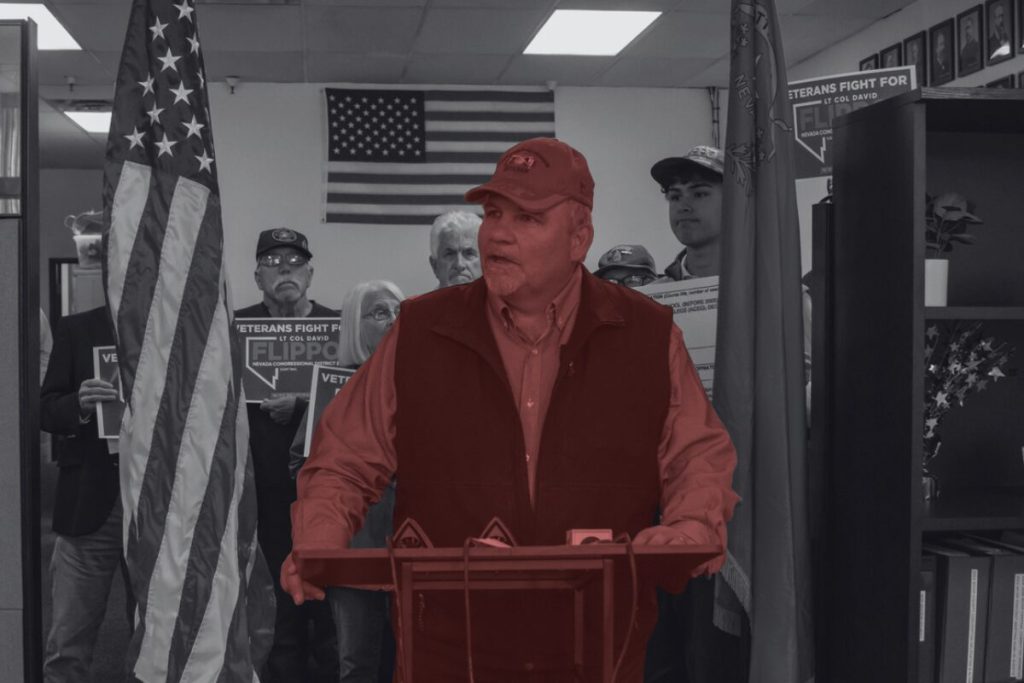
What should have been an uneventful congressional race in Northern Nevada has instead transformed into a focal point for the Democrats, as Republican candidate David Flippo faces a series of blunders that heighten the race’s competitiveness. Once deemed a secure Republican seat, Nevada’s 2nd Congressional District is now receiving increased Democratic scrutiny, primarily due to Flippo’s campaign missteps.
Despite the historically conservative leanings in the 2nd District, Votehub.com still estimates a 75 percent chance of victory for Flippo. However, his Democratic challenger, Teresa Benitez-Thompson, is closely trailing him in polls, indicating that maintaining the district’s Republican status will require more effort than initially anticipated.
Flippo’s challenge stems from his lack of local roots, having relocated to the district only after recognizing the more favorable chances of running there rather than against a Democratic incumbent elsewhere. Recent allegations suggesting he overstated his military service have added to the issues plaguing his campaign. In a show of leadership, Flippo has taken responsibility for his campaign’s errors but attributed them to the inexperience of his team and even his grandchildren.
Republicans in the primaries had the opportunity to choose a more established candidate with local ties and a solid legislative record but ultimately opted for Flippo based on his Trump endorsement. This decision leaves the party contemplating the extent of resources they will need to invest to prevent a potential shift of this reliably red district to blue, marking a historic change.
The situation is reflective of broader national trends wherein the Trump-centered criteria for Republican candidates across various states have resulted in unexpectedly competitive races that once seemed guaranteed for GOP wins. For instance, Texas could elect a Democratic senator and see the governorship transition as well.
These electoral hurdles don’t come as a surprise, as candidates themselves recognize their challenges often stem from their affiliations with Trump. The replacement of traditional conservative values with an allegiance to one individual’s personality has contributed to these complications. In contrast, a pre-Trump Republican party would not have entertained significant tax increases or wealth redistribution strategies, which are currently aligned with Trump’s policies.
The Republican Party’s unwavering commitment to Trump’s perspective continues to influence candidate selection, even amidst potential revelations about Trump’s own behaviors reminiscent of critiques leveled against his opponents. Consequently, many deep-red districts and Republican strongholds are facing increasing competitiveness in elections.
However, while this scenario presents challenges for the Democrat Party, it does not necessarily signal the onset of lasting Democratic dominance. In a two-party system, one party’s descent into a personality-driven politics allows the opposition to gain ground without needing broad appeal, leading to a situation where many voters view both major parties unfavorably.
Currently, Democrats struggle to generate enthusiasm for their policies, with many voters choosing them only as a lesser evil. This could yield immediate wins in upcoming elections, despite a lack of long-term viability. A well-rounded candidate from either party might achieve widespread success, but systemic incentives in American politics discourage such pragmatism, resulting in a cycle where voters continually choose between the relatively unfavorable options presented to them.
The outcome in the 2nd District remains uncertain, yet the very presence of competition reflects that the predictable political system is anything but dull, even in traditionally secure areas. Unfortunately, this environment contributes to a growing sense of frustration among the electorate, highlighting the challenges facing ordinary Americans in contemporary politics.



Comments
No comments yet.